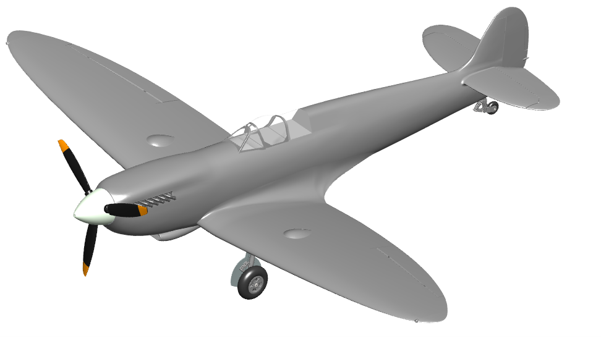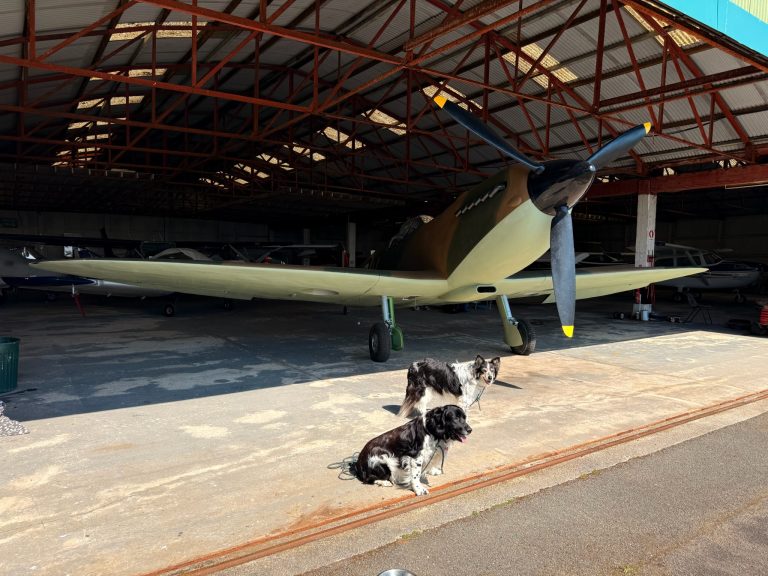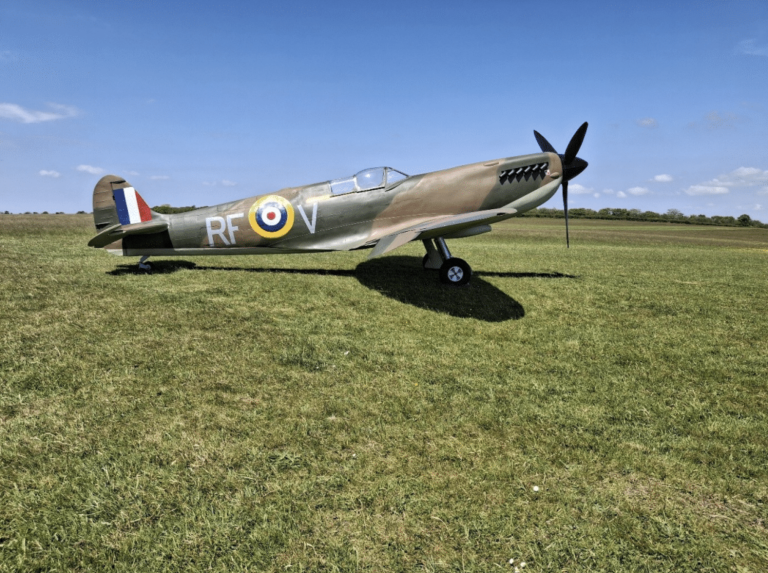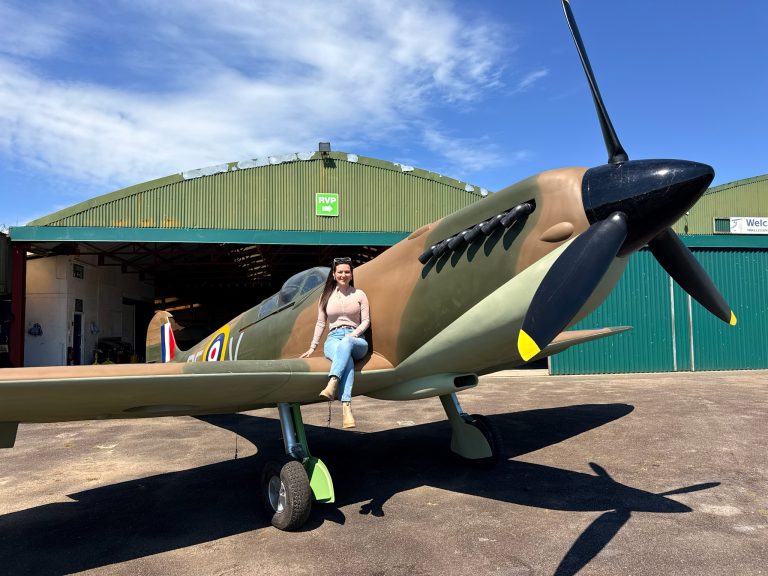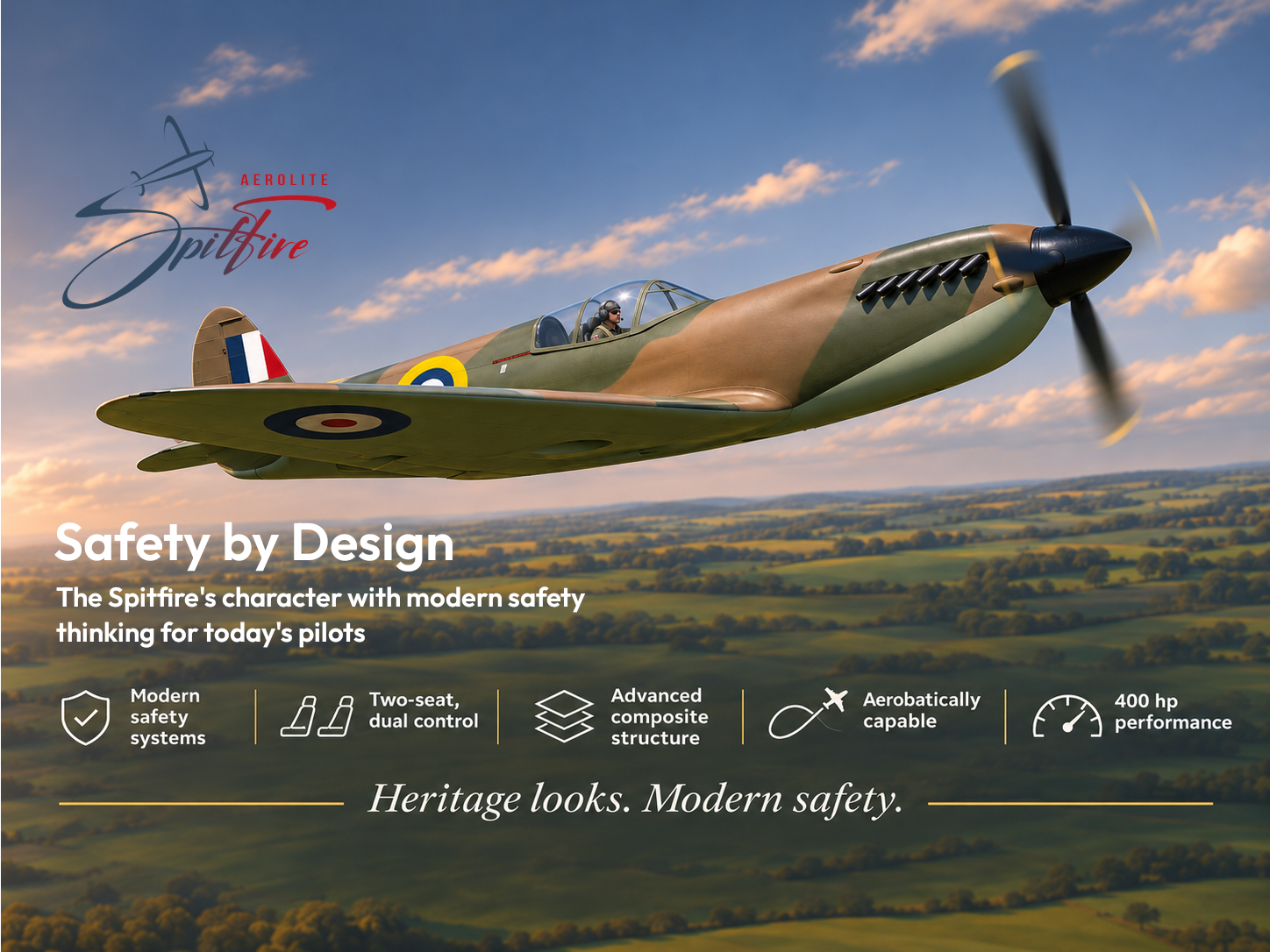
A legendary fighter re-focused for recreational exhilaration backed by today’s aviation safety.
In addition to meeting all the required stringent safety requirements, the Aerolite design embodies features which exceed the required safety standards.
Compared with the historic aircraft the Aerolite Spitfire upgraded design includes:
2. Cockpit safety cell
3. Improved handling
4. Modern powertrain
5. Dual flight controls
A Parachute for everyone… including the aircraft
Aerolite has been designed for use with a rocket-deployed (ballistic), large parachute capable of supporting the entire aircraft.
In an extreme emergency, perhaps where a conventional emergency landing is impossible, the pilot can deploy the system.
If the pilot is unable to, then the passenger can deploy the ballistic chute with a tug on a prominently positioned yellow/black lever.
The chute brings the aircraft to the ground at a descent – and more importantly, survivable, rate. While any aircraft might sustain damage during this manner of emergency landing, those on board are the first priority.
The Aramid Cockpit Safety Cell
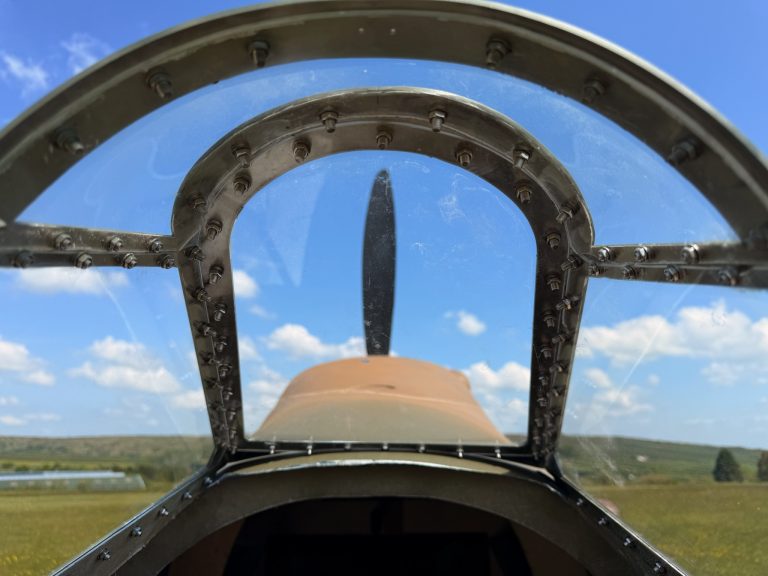
The second major element of our safety focus is an Aramid-reinforced cockpit safety cell.
Aramid fibres, familiar through materials such as Kevlar, are valued for their toughness, resistance to tearing and ability to absorb energy.
The Aerolite’s primary structure is based on advanced carbon-fibre composite construction, providing exceptional strength and stiffness for relatively little weight.
By combining Carbon composites and Aramid materials in a carefully engineered structure, the lightweight efficiency of carbon fibre and additional toughness and penetration resistance of Aramid reinforcement provides enormous safety advantages.
Making the Spitfire Easier to Handle
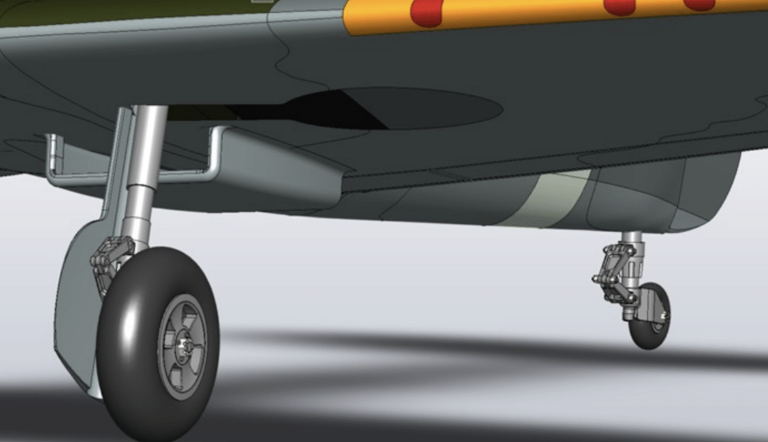
A wider undercarriage. The original Spitfire’s narrow-track undercarriage was notoriously demanding, particularly in crosswinds. The Aerolite Spitfire’s track is approximately 50% wider, to improve directional stability and make ground handling less challenging.
Lower wing loading. With substantially less weight carried by the same wing area, the Aerolite Spitfire is designed to have a wing loading around 30% lower than an early Spitfire Mk I to contribute to lower stalling, approach and landing speeds.
Greater stability. The tail’s control surfaces have been enlarged to improve stability and control characteristics; important particularly in the take-off and landing phase.
Better approach control. The design also provides for a ventral airbrake to supplement the flaps. This helps pilots manage the energy of this exceptionally slippery, low-drag aeroplane; particularly during approach and landing. It also serves as a dive brake preventing over speeding and excessive heaviness on the controls when necessary.
These are well-considered innovations for this next generation Spitfire and will make a considerable difference to everyday flying.
Modern Powertrain
The Aerolite has been developed around a modern, proven aeroengine, with improved operating reliability, serviceability and maintainability among primary objectives.
Two Sets of Controls
Just as importantly, the aircraft has tandem seating and dual flight controls, so
an instructor or experienced safety pilot at the rear controls can make familiarisation, conversion training and supervised flying simple.
For an aeroplane with the performance and handling of the Aerolite Spitfire, this is an important contribution to operational safety.
If you would like to explore the thinking, history and engineering behind the Aerolite Spitfire in more detail, follow the story through the articles below.
Each piece stands on its own, but read in sequence they chart the journey from the original wartime thinking, through design and engineering development, to the commercial vision for the aircraft today.
1. Aerolite Spitfire – An Overview
2. The Aerolite Spitfire Design Challenge
3. An Idea Born from Wartime Necessity.
4. Why Doesn’t the Aerolite Spitfire Use A Merlin Engine?
5. From Concept to Full Scale Development.
6. Engineering Development and LAA Oversight
7. Commercial Development and Market Validation.
8. Every Pilots Dream Just Got Wings.
10. Same Shape, Different Mission
12. Built to Thrill – Designed to Protect
Contact denise.mullen@aerolite-spitfire.com
#Spitfire #Kitplane #HomebuiltAircraft #GeneralAviation #PrivatePilot #supermarinespitfire #raf #warbirds #avgeek