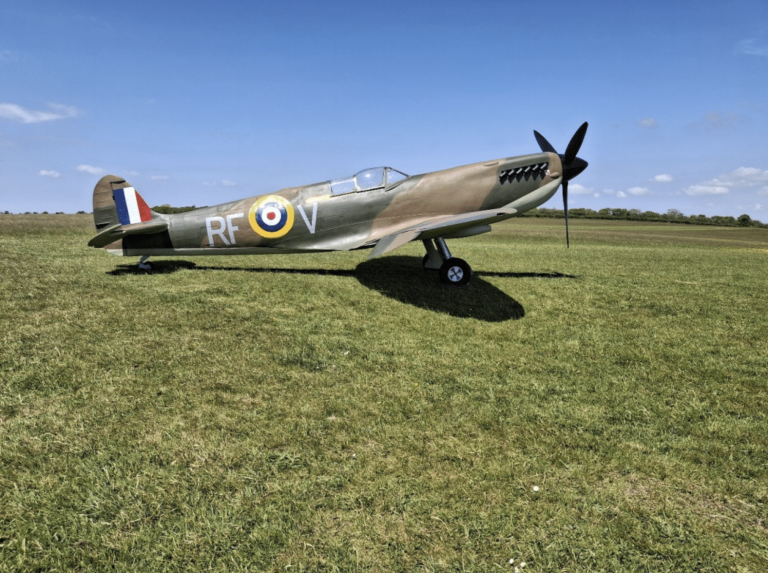
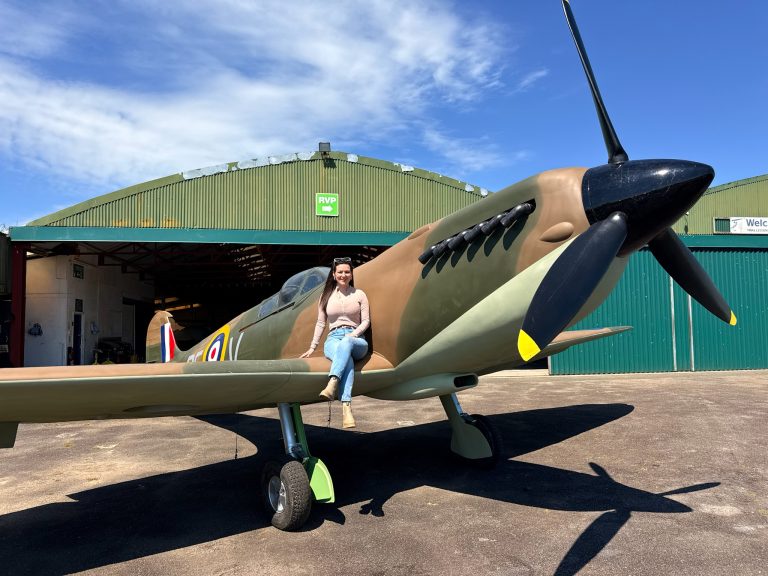
For those familiar with the markings of wartime Spitfires, the letters painted on an aircraft identified the squadron to which it belonged.
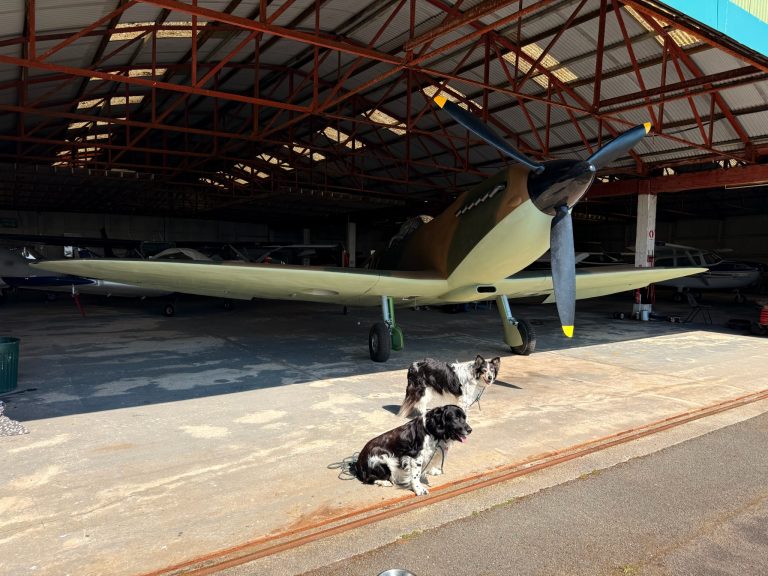
The “RF” on the Aerolite Spitfire identifies No. 303 (Polish) Squadron, based at RAF Northolt in Middlesex. The “V” identifies the individual aircraft.
But for us, RF-V has a much more personal significance.
It represents a connection to Flight Lieutenant Jan Kazimierz Michał Daszewski, our CEO Jeremy Meeson’s great-uncle, who flew with No. 303 Squadron during the Second World War.
Jeremy takes up the story:
“On 4 April 1942, at just 26 years of age, Jan was killed while flying a Spitfire with the squadron.
His story was already one of extraordinary bravery and survival. In September 1940, during the Battle of Britain, he was flying a Hurricane I, P3890, when he was shot down and severely wounded. He managed to bail out – and survive.
When I began researching his history, I became increasingly fascinated not only by his story, but by the aircraft and the remarkable people who designed, built and flew them.
That research ultimately became one of the inspirations behind the Aerolite Spitfire.
Another event helped turn that interest into action.
While researching Jan’s story, around 600 people were made redundant from an aircraft manufacturing facility I had visited.
It prompted a simple question:
Could the facility, its people and resources somehow be deployed making new Spitfires?
Of course, recreating an original Spitfire as a production aircraft is not straightforward. But the question sparked a much bigger idea.
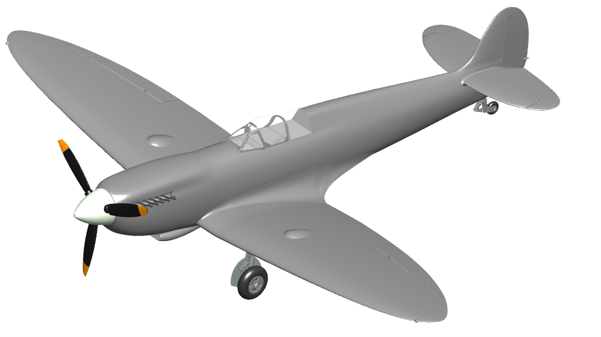
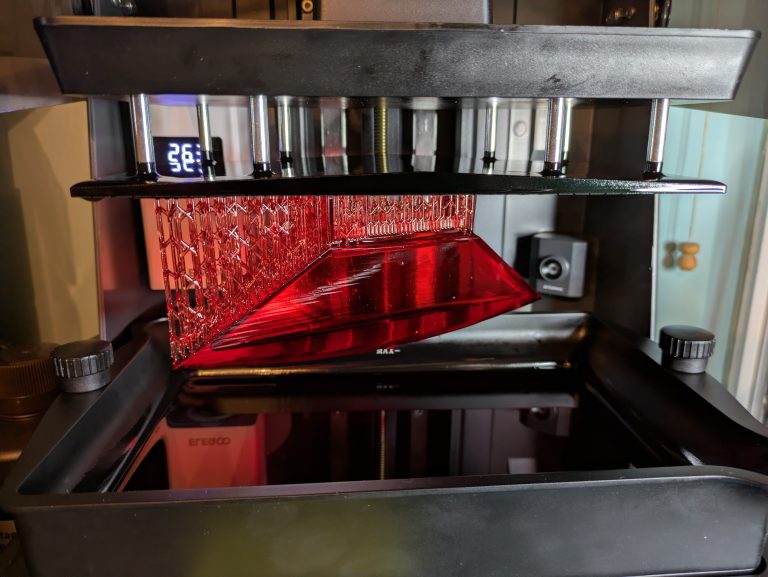
What if modern composite materials and manufacturing techniques could be combined with the unmistakable form and spirit of the Spitfire to create an entirely new aircraft?
That became the starting point for what is now the Aerolite Spitfire.
The project is focused on creating a modern aircraft, designed around contemporary materials, technology and manufacturing methods, while drawing heavily on the engineering, aesthetics and heritage of the original Spitfire.
The full-size Aerolite Spitfire concept model carries RF-V for a very specific reason.
It is a tribute to Jan.
Every time the aircraft is displayed, those two letters and a single number provide a reminder that behind the history of the Spitfire are thousands of individual stories of courage, sacrifice and determination.
For me, RF-V represents one of those stories.
The Aerolite Spitfire is about looking forward — bringing a new generation of Spitfire-inspired aircraft into production using modern technology.
But it is equally important to remember where that inspiration comes from.
RF-V is our small tribute to a 26-year-old Polish fighter pilot who gave his life flying for Britain.
His story helped inspire the Aerolite Spitfire, and his aircraft code now forms part of its story too.”